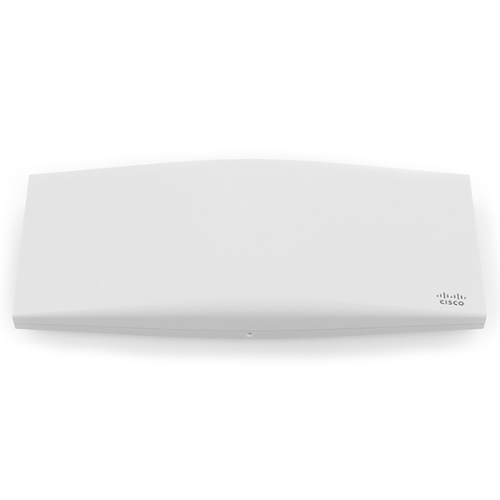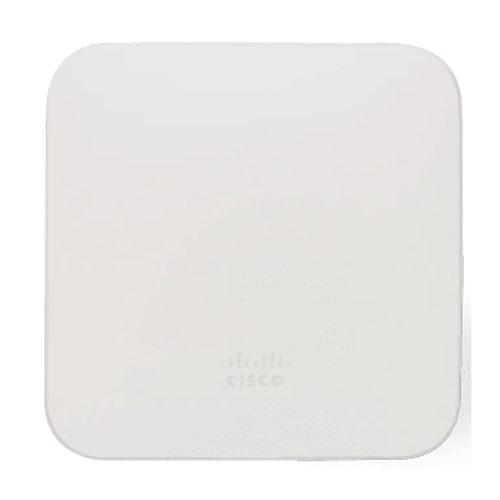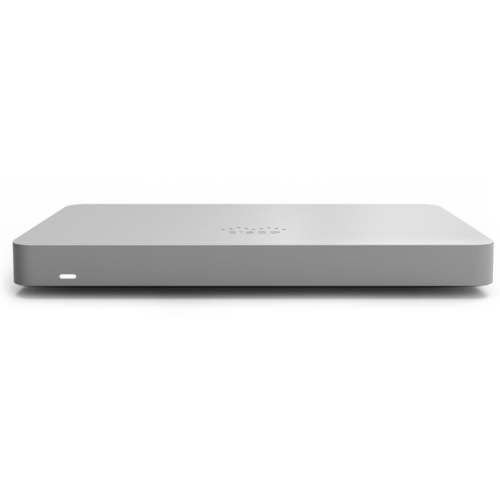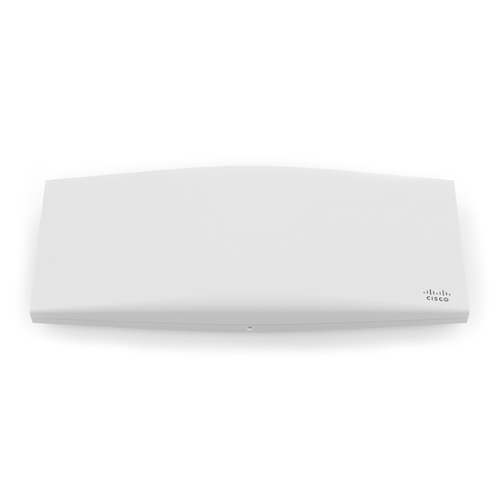

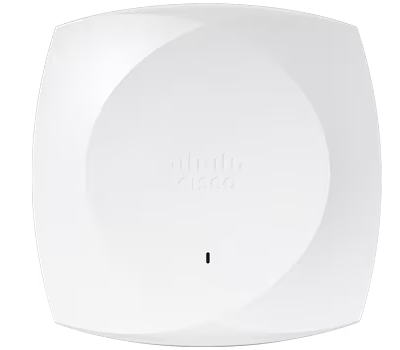

Cisco Meraki CW9176I
₹221,865.38
Wi-Fi 7 for resilient connectivity and future-proofed spaces
Overview
Cisco’s Wi-Fi 7 access points power the next generation of wireless experiences, designed to revolutionize connectivity and digital experiences. Offering unprecedented speeds, enhanced security, and resilient connectivity, these products are ideal for high-density environments and critical applications. They seamlessly integrate into your existing network, whether on-premises, cloud-based, or hybrid, providing flexible deployment options to suit various organizational needs.
The Cisco® Wireless Wi-Fi 7 access points enable transformative user experiences. Enterprises can leverage the predictability and low latency of Wi-Fi 7 to support better video streaming, Augmented Reality (AR), and Virtual Reality (VR) applications. By connecting people and things within physical spaces, Cisco’s wireless solutions with Wi-Fi 7 offer real-time insights and actions such as indoor navigation and personalized user experiences.
Create differentiated customer experiences, accelerate digital business transformation, and prepare networks for the future with Cisco’s Wi-Fi 7 solutions. With faster data transfer rates, reduced network congestion, and simplified network management with AI-driven insights and automation, the Cisco Wireless 9176 Series Access Points provide the foundation for the future of wireless.
Features and benefits
|
Feature |
Benefit |
|
Wi-Fi 7 (802.11be) |
The IEEE 802.11be standard, also known as Extremely High Throughput (EHT) or Wi-Fi 7, is the latest in Wi-Fi with enhancements such as 4K-QAM, Multilink Operation (MLO), enhanced Orthogonal Frequency-Division Multiple Access (OFDMA), preamble puncturing support for a 320-MHz channel width built to increase data transfer rates and connection performance, especially for applications requiring low latency like AR and VR apps. |
|
Wi-Fi 6E (802.11ax) |
The IEEE 802.11ax standard, also known as High-Efficiency Wireless (HEW) or Wi-Fi 6, builds on 802.11ac. It delivers a better experience in typical environments with more predictable performance for advanced applications such as 4K or 8K video; high-density, high-definition collaboration apps; all-wireless offices; and the Internet of Things (IoT). Wi-Fi 6E is Wi-Fi 6 “extended” into the 6-GHz frequency band. |
|
10G Multigigabit Ethernet |
Multigigabit Ethernet provides speeds up to 10 Gbps. Note: Cat6/Cat6A cabling is required for 10 Gbps port speeds. Cat 5e cable can support speeds up to 5 Gbps. |
|
Built-in GNSS/GPS |
A built-in GNSS/GPS antenna allows seamless co-location onboarding, with the AP intelligently selecting regulatory domain and location information. |
|
Integrated Ultra-Wideband (UWB) radio |
For precision asset tracking and location services using Cisco Wi-Fi 7 APs, an integrated UWB radio provides the flexibility to enable more use cases for enterprises. |
|
AP power optimizations (AP Power Save Mode) |
AP Power optimizations (AP Power save mode) allow the access point to reduce its power consumption by e.g. shutting off radios during off-hours and weekends – while still being smart enough to re-engage all features should they be needed. This both saves power and reduces the carbon footprint of running a wireless network. |
|
Band steering |
Enhanced to help clients that are 6-GHz capable to leave the 5-GHz radio and connect to the 6-GHz radio. Wi-Fi 6E-capable clients are automatically directed to connect to the 6-GHz radio to take advantage of the benefits that that radio offers while clearing the 2.4- and 5-GHz radios for legacy clients. |
|
Intelligent Capture |
Intelligent Capture probes the network and provides Cisco Catalyst™ Center with deep analysis. The software can track more than 240 anomalies and instantaneously review all packets on demand, emulating the onsite network administrator. Intelligent Capture allows for more informed decisions on your wireless networks. |
|
Flexible Radio Assignment (FRA) |
FRA allows the access points to intelligently determine the operating mode of client-serving radios based on the RF environment and traffic demands. The CW9176I/D1 access points can be flexibly configured in tri-radio mode with 2.4GHz, 5GHz, 6GHz or as 5GHz, 5GHz, 6GHz. |
|
Bluetooth/BLE |
The integrated Bluetooth Low Energy (BLE) 5.3 radio enables location-based use cases such as asset tracking, wayfinding, and analytics. Upgradeable to BLE 6 with future software update |
|
Application hosting |
Application hosting helps simplify IoT deployments and ready them for the future by eliminating the need to install and manage overlay networks. Using the USB interface, containerized applications and hardware modules can be deployed to reduce cost and complexity. Adding Cisco Catalyst Center provides workflows and deployment-wide application lifecycle management. |
|
Container support for applications |
Container support enables edge computing capabilities for IoT applications on the host access point. |
|
Accelerometer |
A built-in accelerometer allows continuous, post-deployment verification of how the AP is installed. |
Product specifications
|
Item |
Specification |
||||||||||||||||
|
Part numbers |
Cisco Wireless 9176 Access Points: Internal antennas ● CW9176I: Indoor access point with omnidirectional antenna
● CW9176D1: Indoor access point with directional antenna
|
||||||||||||||||
|
Software |
Cisco Wireless 9176 Series ● Cisco IOS ® XE Software Release 17.15.2 or later
|
||||||||||||||||
|
Supported wireless LAN controllers |
● Catalyst 9800 Series Wireless Controllers (physical or virtual)
● Cisco Catalyst 9000 switches with Embedded Wireless Controller in SDA mode
|
||||||||||||||||
|
802.11be |
● 4x4 uplink/downlink MU-MIMO with four spatial streams (2.4/5 GHz(XOR), 5 GHz, and 6 GHz)
● 4096 QAM
● Multilink operation
● Preamble puncturing
● Uplink/downlink OFDMA
● TWT
● BSS coloring
● Maximal Ratio Combining (MRC)
● 20-, 40-, 80-, 160-, and 320-MHz channels (6 GHz)
● 20-, 40-, 80-, and 160-MHz channels (5 GHz)
● 20-MHz channels (2.4 GHz)
● PHY data rates up to 18 Gbps (4x4 320 MHz on 6 GHz, 4x4 160 MHz on 5 GHz, and 4x4 20 MHz on 2.4 GHz) or PHY data rates up to 23 Gbps (4x4 320 MHz on 6 GHz, 4x4 160 MHz on 5 GHz and 4x4 160 MHz on 5 GHz)
● Packet aggregation: Aggregate MAC Protocol Data Unit (A-MPDU) (transmit and receive), Aggregate MAC Service Data Unit (A-MSDU) (transmit and receive)
● 802.11 Dynamic Frequency Selection (DFS)
● Cyclic Shift Diversity (CSD) support
● Wi-Fi Protected Access 3 (WPA3) support
|
||||||||||||||||
|
802.11ax |
● 4x4 uplink/downlink MU-MIMO with four spatial streams each (2.4/5 GHz, 5 GHz, and 6 GHz)
● Uplink/downlink OFDMA
● 1024 QAM
● TWT
● BSS coloring
● MRC
● 802.11ax beamforming
● 20-, 40-, 80-, and 160-MHz channels (5 and 6-GHz)
● 20-MHz channels (2.4-GHz)
● PHY data rates up to 10.1 Gbps (4x4 160 MHz on 6 GHz, 4x4 160 MHz on 5 GHz, and 4x4 20 MHz on 2.4 GHz) or PHY data rates up to 14.4 Gbps (4x4 160 MHz on 6 GHz, 4x4 160 MHz on 5 GHz, and 4x4 160 MHz on 5 GHz)
● Packet aggregation: A-MPDU (transmit and receive), A-MSDU (transmit and receive)
● 802.11 DFS
● CSD support
● WPA2/WPA3 support
|
||||||||||||||||
|
802.11ac |
● 4x4 + 4x4 downlink MU-MIMO with 4x4 spatial streams
● MRC
● 802.11ac beamforming
● 20-, 40-, 80-, and 160-MHz channels
● PHY data rates up to 3.4 Gbps (dual 4x4 160 MHz on 5 GHz)
● Packet aggregation: A-MPDU (transmit and receive), A-MSDU (transmit and receive)
● 802.11 DFS
● CSD support
● WPA2/WPA3 support
|
||||||||||||||||
|
802.11n version 2.0 (and related) capabilities |
● 4x4 MIMO with four spatial streams
● MRC
● 802.11n and 802.11a/g beamforming
● 20- and 40-MHz channels
● PHY data rates up to 1.5 Gbps (40 MHz with 5 GHz and 20 MHz with 2.4 GHz)
● Packet aggregation: A-MPDU (transmit and receive), A-MSDU (transmit and receive)
● 802.11 DFS
● CSD support
|
||||||||||||||||
|
Integrated antenna |
Cisco Wireless 9176I ● 2.4 GHz: Peak gain 5 dBi, internal antenna, omnidirectional in azimuth
● 5 GHz: Peak gain 5 dBi, internal antenna, omnidirectional in azimuth
● 6 GHz: Peak gain 6 dBi, internal antenna, omnidirectional in azimuth
● IoT: Peak gain 4 dBi, internal antenna, omnidirectional in azimuth
● UWB: Peak gain 7 dBi, internal antenna, omnidirectional in azimuth
● GNSS: (L1) Peak gain 3 dBi, (L5) Peak gain 3 dBi, internal antenna, omnidirectional in azimuth
Cisco Wireless 9176D1 ● 2.4 GHz: Peak gain 7 dBi, internal antenna, directional in azimuth (80 x 80 beam width)
● 5 GHz: Peak gain 8 dBi, internal antenna, directional in azimuth (70 x 70 beam width)
● 6 GHz: Peak gain 8 dBi, internal antenna, directional in azimuth (70 x 70 beam width)
● IoT: Peak gain 7 dBi, internal antenna, omnidirectional in azimuth (70 x 70 beam width)
● UWB: Peak gain 10 dBi, internal antenna, omnidirectional in azimuth
● GNSS: (L1) Peak gain 2 dBi, (L5) Peak gain 5 dBi, internal antenna, omnidirectional in azimuth
|
||||||||||||||||
|
Interfaces |
● 1x 100M/1000M/2.5G/5G/10G Multigigabit Ethernet (RJ-45)
● Management console port (RJ-45) with default speed of 115200 bps
● USB 2.0 at 9W
|
||||||||||||||||
|
Incorporated radios |
● Three built in radios including GPS/GNSS, dedicated IoT radio, and Ultra Wide Band radio
|
||||||||||||||||
|
Indicators |
● Status LED indicates boot loader status, association status, operating status, boot loader warnings, and boot loader errors
|
||||||||||||||||
|
Dimensions (W x L x H) |
● 9176I access point (without mounting brackets):
◦ 9.5 x 9.5 x 2.0 in. (24 x 24 x 5.1 cm) ● 9176D1 access point (without mounting brackets):
◦ 9.5 x 9.5 x 2.0 in. (24 x 25 x 5.1 cm) |
||||||||||||||||
|
Weight |
Cisco Wireless 9176I ● 3.4 lb. (1.56 kg)
Cisco Wireless 9176D1 ● 3.4 lb. (1.56 kg)
|
||||||||||||||||
|
Input power requirements |
● 802.3bt Cisco Universal PoE (Cisco UPOE ®), 802.3at Power over Ethernet Plus (PoE+), 802.3af PoE (only for configuration staging, all radios off)
● (Or) Cisco power injector CW-INJ-8
|
||||||||||||||||
|
Cisco Wireless 9176I |
|||||||||||||||||
|
Power source |
2.4-GHz radio |
5-GHz radio |
6-GHz radio |
Link speed |
USB |
Max PoE power consumption |
|||||||||||
|
802.3bt (Class 5) (UPOE) |
4x4 |
4x4 |
4x4 |
1 x 10G |
Y (9W) |
39W |
|||||||||||
|
802.3at (PoE+) |
2x2 |
4x4 |
4x4 |
1x 2.5G |
N |
25.5W |
|||||||||||
|
802.3af (PoE) |
– |
– |
– |
1x 1G |
N |
13.95W |
|||||||||||
|
Note: Actual power consumption may vary depending on access point usage. It is recommended that you ensure that Link Layer Discovery Protocol (LLDP)/Cisco Discovery Protocol is enabled to allow proper power negotiation. |
|||||||||||||||||
|
Cisco Wireless 9176D1 |
|||||||||||||||||
|
Power source |
2.4-GHz radio |
5-GHz radio |
6-GHz radio |
Link speed |
USB |
Max PoE power consumption |
|||||||||||
|
802.3bt (Class 5) (UPOE) |
4x4 |
4x4 |
4x4 |
1 x 10G |
Y (9W) |
39W |
|||||||||||
|
802.3at (PoE+) |
2x2 |
4x4 |
4x4 |
1x 2.5G |
N |
25.5W |
|||||||||||
|
802.3af (PoE) |
– |
– |
– |
1x 1G |
N |
13.95W |
|||||||||||
|
Note: Above power draw table starting with IOS-XE version 17.15.3 |
|||||||||||||||||
|
CW9176I |
|||||||||||||||||
|
Power Source |
Idle |
Typical |
|||||||||||||||
|
802.3bt (UPOE) |
15.5W ±2W |
17.7W ±4W |
|||||||||||||||
|
802.3at (PoE+) |
15.4W ±2W |
17.2W ±4W |
|||||||||||||||
|
Note: Actual power consumption may vary depending on AP usage. Typical power consumption assumes AP is passing traffic* during typical business hours, and is idle during off-business hours. Business hours are assumed to be 11 hours a day, 6 days a week. * Test Conditions: 802.3bt: The 6 GHz, 5 GHz band all operating at 160 MHz (4x4) passing 1 Gbps per band of download traffic and the 2.4 GHz band operating at 20 MHz (4x4) passing 150 Mbps of download traffic; USB disabled; 10G Ethernet Port; Ambient temperature 25˚C (77°F). 802.3at: The 6 GHz and the 5 GHz bands both operating at 160 MHz (2x2) passing 200 Mbps per band of download traffic and the 2.4 GHz band operating at 20 MHz (2x2) passing 50 Mbps of download traffic; USB disabled; 2.5G Ethernet Port; Ambient temperature 25˚C (77°F). |
|||||||||||||||||
|
CW9176D1 |
|||||||||||||||||
|
Power Source |
Idle |
Typical |
|||||||||||||||
|
802.3bt (UPOE) |
15.5W ±2W |
17.7W ±4W |
|||||||||||||||
|
802.3at (PoE+) |
15.4W ±2W |
17.2W ±4W |
|||||||||||||||
|
Note: Actual power consumption may vary depending on AP usage. Typical power consumption assumes AP is passing traffic* during typical business hours, and is idle during off-business hours. Business hours are assumed to be 11 hours a day, 6 days a week. * Test Conditions: 802.3bt: The 6 GHz, 5 GHz band all operating at 160 MHz (4x4) passing 1 Gbps per band of download traffic and the 2.4 GHz band operating at 20 MHz (4x4) passing 150 Mbps of download traffic; USB disabled; 1x 10G Ethernet Ports; Ambient temperature 25˚C (77°F). 802.3at: The 6 GHz and the 5 GHz bands both operating at 160 MHz (2x2) passing 200 Mbps per band of download traffic and the 2.4 GHz band operating at 20 MHz (2x2) passing 50 Mbps of download traffic; USB disabled; 10G Ethernet Port; Ambient temperature 25˚C (77°F). |
|||||||||||||||||
|
Environmental |
Cisco Wireless 9176I ● Nonoperating (storage) temperature: -22° to 158°F (-30° to 70°C)
● Nonoperating (storage) altitude test: 25°C (77°F) at 15,000 ft (4570 m)
● Operating temperature: 32° to 122°F (0° to 50°C)
● Operating humidity: 10% to 90% (noncondensing)
● Operating altitude test: 40°C (104°F) at 9843 ft (3000 m)
Cisco Wireless 9176D1 ● Nonoperating (storage) temperature: -22° to 158°F (-30° to 70°C)
● Nonoperating (storage) altitude test: 25°C (77°F) at 15,000 ft (4570 m)
● Operating temperature: 32° to 122°F (0° to 50°C)
● Operating humidity: 10% to 90% (noncondensing)
● Operating altitude test: 40°C (104°F) at 9843 ft (3000 m)
|
||||||||||||||||
|
System memory |
● 4096 MB DRAM
● 16 GB storage flash
|
||||||||||||||||
|
Available transmit power settings |
Cisco Wireless 9176I |
||||||||||||||||
|
2.4 GHz ● 23 dBm (200 mW)
● -4 dBm (0.39 mW)
|
5 GHz ● 23 dBm (200 mW)
● -4 dBm (0.39 mW)
|
6 GHz ● 23 dBm (200 mW)
● -4 dBm (0.39 mW)
Note: In countries where use of the 6-GHz band is not allowed or there is no current software support, the 6-GHz radio will be disabled. The radio may be enabled with future software, once the product is certified to operate in 6 GHz for that country. |
|||||||||||||||
|
Cisco Wireless 9176D1 |
|||||||||||||||||
|
2.4 GHz ● 23 dBm (200 mW)
● -4 dBm (0.39 mW)
|
5 GHz ● 23 dBm (200 mW)
● -4 dBm (0.39 mW)
|
6 GHz ● 23 dBm (200 mW)
● -4 dBm (0.39 mW)
Note: In countries where use of the 6-GHz band is not allowed or there is no current software support, the 6-GHz radio will be disabled. The radio may be enabled with future software, once the product is certified to operate in 6 GHz for that country. |
|||||||||||||||
|
Compliance standards |
● Safety:
◦ IEC 60950-1 / IEC 62368-1 Ed.3 (with Ed.2 Deviation annex) ◦ EN 60950-1 / EN 62368-1 Ed.3 (with Ed.2 Deviation annex) ◦ UL 60950-1 / UL62368-1 3rd (with Ed.2 Deviation annex) ◦ CAN/CSA-C22.2 No. 60950-1 / CAN/CSA-C22.2 No. 62368-1 3rd (with Ed.2 Deviation annex) ◦ AS/NZS60950.1 / AS/NZS62368.1 Ed.3 (with Ed.2 Deviation annex) ◦ UL 2043 ◦ Class III equipment ● Emissions:
◦ CISPR 32 (rev. 2015) +AMD1:2019 ◦ EN 55032:2015/A11:2020 ◦ EN IEC 61000-3-2:2019/A1:2021 ◦ EN 61000-3-3:2013+A1:2019 ◦ AS/NZS CISPR32: 2015+AMD1:2020 ◦ 47 CFR FCC Part 15B ◦ ICES-003 (Issue 7, Class B) ◦ VCCI-CISPR 32:2016 ◦ CNS 13438:2006 (95) ◦ KS C 9832:2019 ◦ QCVN 118:2018/BTTTT ● Immunity:
◦ EN 55035:2017+A11:2020 ◦ KS C 9835:2019 ● Emissions and immunity:
◦ EN 301 489-1 V2.2.3 (2019-11) ◦ EN 301 489-17 V3.2.4 (2020-09) ◦ QCVN (18:2014) ◦ QCVN 112:2017/BTTTT ◦ KS X 3124:2020 ◦ KS X 3126:2020 ◦ EN 61000-6-1:2019 ◦ EN 60601-1-2:2015+A1:2021 |
● Radio:
◦ EN 300 328 (v2.2.2) ◦ EN 301 893 (v2.1.1) ◦ EN 303 687 (v0.0.14, draft) ◦ AS/NZS 4268 (rev. 2017) ◦ 47 CFR FCC Part 15C, 15.247, 15.407 ◦ RSP-100 ◦ RSS-GEN ◦ RSS-247 ◦ LP0002 (109) ◦ Japan Std. 66, and Std. 71 ● RF safety:
◦ EN 50385:2017 ◦ AS/NZS 2772 (rev. 2016) ◦ 47 CFR Part 2.1091 ◦ RSS-102 ◦ IEEE standards: ◦ IEEE 802.3 ◦ IEEE 802.3ab ◦ IEEE 802.3af/at ◦ IEEE 802.11a/b/g/n/ac/ax/be ◦ IEEE 802.11h, 802.11d ● Security:
◦ 802.11i (WPA2, WPA3) ◦ 802.1x/802.1x - SHA256 ◦ Enhanced Open/OWE ◦ Advanced Encryption Standard (AES) - GCMP128, GCMP256 and CCMP256 ● Extensible Authentication Protocol (EAP) types:
◦ EAP-Transport Layer Security (TLS) ◦ EAP-Tunneled TLS (TTLS) or Microsoft Challenge Handshake Authentication Protocol (MSCHAP) v2 ◦ Protected EAP (PEAP) v0 or EAP-MSCHAP v2 ◦ EAP-Flexible Authentication via Secure Tunneling (EAP-FAST) ◦ PEAP v1 or EAP-Generic Token Card (GTC) ◦ EAP-Subscriber Identity Module (SIM) |
|||||||||||||||
|
Certifications |
● Wi-Fi Alliance: Wi-Fi 7 (R1), Wi-Fi 6 (R2), Wi-Fi 6E, WPA3-R3, WPA3-Suite B, Enhanced Open Security
● Bluetooth SIG: Bluetooth Low Energy
|
||||||||||||||||
Related products